
Researcher Spotlight is a video series by the Consortium showcasing research from our grant awardees that scientifically evaluates clinical outcomes of medical marijuana use. Each episode spotlights a grant recipient to share their research question, methodological approaches and clinical relevance of current/expected outcomes.
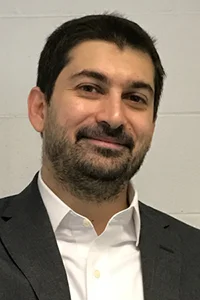
Dr. Simone Marini, Professor in the College of Public Health and Health Professions at the University of Florida, is a 2021 Consortium Grant recipient whose funded research focuses on how CBD can reduce biomarkers of inflammation at the single-cell level in people living with HIV.
Welcome to Researcher Spotlight, a video series of the Consortium for Medical Marijuana Clinical Outcomes Research, showcasing research of our grant awardees. Each episode spotlights a grant recipient to share their research question, methodological approaches, and current and expected outcomes. On today's installment, we are visiting Dr. Simone Marini, professor in the College of Public Health and Health Professions at the University of Florida. Dr. Marini is a 2021 Consortium grant recipient whose funded research focuses on how CBD can reduce biomarkers of inflammation at the single-cell level in people living with HIV.
I am Simone Marini. I am an assistant professor in the Department of Epidemiology here at University of Florida. My background is in bioengineering and biomedical engineering, and my research is about applications of artificial intelligence to health medicine. I develop AI and data science approaches to study health. I am interested in the biological phenomenon of inflammation.
There's a baseline inflammation we have that grows when we get older. So in my research, I want to understand exactly what causes, at the molecular level, at the cell level, at the micro level, this inflammatory effect. So older adults have a higher level of inflammation, it's like systemic, and people living with HIV roughly speaking, have these higher level of inflammation as if they were older. And so we wanted to see the effect of CBD on this baseline information and at the same time understand the molecular reason.
So the main idea of the project is to obtain blood samples from people living with HIV before and after a month or more of CBD therapy using CBD product that is also readily available over the counter to the public and with the dosage that is recommended by the manufacturer. So mimicking what people probably are already doing, document its effect on inflammation and at the same time look at the changes that are associated with the CBD therapy inside the cells of the immune system. We discovered that in myeloid cells, which is a specific type of cell in the immune system, in people living with HIV, we find that in those cells, there's a group of genes driving up inflammation that are curbed, and their effect is diminished after one month or more of CBD therapy.
Okay, so, here we have a representation of our cells, and we have around 40,000 of them. Each dot is a different cell. And the fact that two dots are closer or further away represents how similar they are. So cells that have been collected at baseline are red, and cells that have been collected after CBD therapy are blue. Here in myeloid cells, you can appreciate how blue and red cells are split, which means that all the baseline myeloid cells tend to behave in the same way, but it's a distinct way from the myeloid cell, blue, after CBD. So even without the numbers, you have a visual clear distinction here, which in turn means that the genes that the cells were expressing here are not well overlapped with the genes that they are expressing after CBD. So baseline and CBD are characterized differently in myeloid cells.
CBD is likely to have a molecular effect on inflammation at the relatively low dosage that is recommended for common use. So I think the most valuable finding is the gene module, like is the identity of those genes, because that can pave the way to further investigations. We can still look at the big picture and observe variations in the gene expression. Overall, the road that goes from hey, I did this experiment, found this thing to therapy is a long road. However, this is very promising, and I think in general, the more you are able to go to a deep level in terms of granularity of what you study, the more you unlock possibilities of precision or personalized therapies. In that sense, I think the study is very promising.
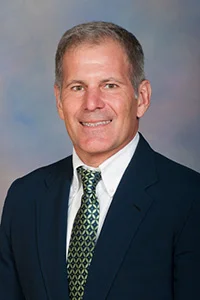
Dr. Paul Borsa, Associate Professor in the Department of Applied Physiology & Kinesiology, at the University of Florida’s College of Health and Human Performance, is a 2019 Consortium Grant recipient. His Consortium-funded research focuses on the effect of Cannabidiol, or CBD, in the recovery process following sports-related injuries.
Welcome to Researcher Spotlight, a new video series of the Consortium for Medical Marijuana Clinical Outcomes Research, showcasing research of our grant awardees that scientifically evaluates clinical outcomes of medical marijuana use. Each episode spotlights a grant recipient to share their research question, methodological approaches, and clinical relevance of current expected outcomes.
On today's installment, we introduce you to Dr. Paul Borsa, Associate Professor in the Department of Applied Physiology and Kinesiology at the University of Florida's College of Health and Human Performance. Dr. Borsa is a 2019 Consortium grant recipient whose consortium funded research focuses on the effect of cannabidiol in the recovery process following sports-related injuries.
My name is Dr. Paul Borsa, and I am currently an associate professor in the Department of Applied Physiology and Kinesiology in the College of Health and Human Performance, and my research lab is the Sports Medicine and Human Performance Research Laboratory. We do research, primarily in pain and exercise and how pain affects movement in terms of injury, disease, illness.
Originally, I was an athletic, certified athletic trainer. So I dealt with athletes. I was my job was to prevent and care for their injuries. I became a pain researcher, initially, and I was looking at pain from the perspective of an athletic injury, recovery from injury, how people deal with injuries, what are things you can do from an intervention perspective to recover better from an injury. And I have a model of where I can experimentally cause an injury and look at recovery from the injury in terms of treatments and things like that.
So, I thought, hey, medical marijuana is growing. It's getting bigger. I know a lot of professional athletes like CBD, and they're using it, but the science lags way behind of what they're doing. So, we need to come up with some scientific evidence or proof of, hey, this works because it does this, this, this, and this. At some point, cannabis is going to come into sports, whether it's Olympics, professional, college, what have you. They're not going to get drug tested for it eventually. And if it does show to be effective at, you know, mitigating inflammation, pain, things like that, that there should be a reason that they're able to use it. Like if you walk into an athletic training room, you'll see a jar of Tylenol or, you know, Advil, can have CBD, something like that. So, that's looking down the road, that's where I kind of see it.
We have a project now where subjects come in and they're cannabis naive, so they're not taking any products. We have a CBD product and the goal of it was to have a product that people are going to buy online or go to the store. This is kind of how I wanted to approach it in terms of a person ordering online because they have a sports injury and they take this amount of per day over a certain amount of time that would replicate what a normal person would do. We do some early baseline testing and then we give them the product. We have what we call a high dose, we have a low dose and then a placebo control, and that's randomized, so they don't know what they're getting. And they go through about two week period where they're using the product. They're taking the product on a daily basis and then they come back on the 10th day and we take baseline measures and we put them through the exercise protocol which gives them that injury, and then they come back. So if it's on a Monday, they come back Tuesday, Wednesday, Thursday, Friday and we test their strength.
We test their their soreness, their pain, their function. We do, you know, climbing stairs, does this hurt? You know, how much? And see how their recovery curve is. So the model is good because it's controlled. They're coming in, and we control the injury in terms of their exercise, their output. So, we kind of have an idea of how they're going to respond, but we can do a lot of things in a short period of time that, for example, if it was a pre-surgery, post-surgery model, they would come in pre-op and we do the measures and then they have surgery and then they come back three months, six months, nine months, this we can do in a week, like five days.
And we've done studies in with and compared to clinical populations and it really does replicate or is very similar to what happens in those longer pre-surgical post-surgical models. We can do blood work, and we can analyze you know we can look for blood biomarkers of inflammation, pain, muscle damage, things like that. And then we can look at functional measures. We can look at self-report pain. We can have them do functional tasks. We can look at strength recovery. We can do questionnaires. So, we can look at some psychological factors.
And when you put those all together, that gives you a very comprehensive model of a person that's injured from, from the blood work to self-report to actual objective test to see how they respond to the intervention and recover time. In the perfect world, we're going to see that, you know, hopefully the high dose has the less, the least pain, the quickest recovery in function, and the placebo control, there's no effects with that, but we'll see.
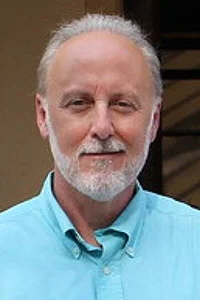
Dr. John Markowitz, Professor in the Department of Pharmacotherapy & Translational Research in College of Pharmacy at University of Florida, is a 2020 Consortium Grant recipient. His Consortium-funded research focuses on the potential for drug-drug interactions between Cannabidiol/CBD and methylphenidate.
Welcome to Researcher Spotlight, a new video series of the Consortium for Medical Marijuana Clinical Outcomes Research, showcasing research of our grant awardees that scientifically evaluates clinical outcomes of medical marijuana use. Each episode spotlights a grant recipient to share their research question, methodological approaches, and clinical relevance of current expected outcomes. On today's installment, we introduce you to Dr. John Markowitz, professor in the Department of Pharmacotherapy and Translational Research in the College of Pharmacy at the University of Florida. Dr. Markowitz is a 2020 Consortium grant recipient whose Consortium-funded research focuses on the potential for drug-drug interactions between cannabidiol/CBD and methylphenidate, commercially known as Ritalin.
So my name is John Markowitz, I'm a professor in the College of Pharmacy. My research program is largely focused on the drug metabolism and disposition of psychiatric medications, different things that influence those, and how a patient may respond. Then we also look a lot at drug interactions and also how differences in genetics, the role that plays in both adverse effects and whether a person is going to have favorable therapeutic effects.
There are certain models that can be used to predict drug-drug interactions at least to a certain degree. And so this was kind of a theme of some things we were doing with some different medications and we decided to look at cannabis and medical marijuana and so on. The use was increasing and so forth and so we decided to look at some of the major cannabinoids that are present. We've developed some interest over the last number of years in a particular liver enzyme called carboxylesterase 1 or CES1, it's abbreviated. And it is actually very abundant enzyme and it has a kind of a critical role in the metabolism of a lot of different prescription medications, probably most prominently methylphenidate or Ritalin.
What we chose to do is pursue a version of CBD called Epidiolex, and Epidiolex is the sort of first FDA-approved version of cannabidiol. The reason we chose it is that methylphenidate is a drug that largely has only one metabolic pathway and that's through this CS1 route. What we find with methylphenidate gives us information about what we're likely to find with all these other drugs that go through that pathway as well. We employed a design that on one phase they received Epidiolex CBD, and then another time, and would be randomized, they would get Epidiolex placebo.
They've had three days of CBD or placebo and then they are administered another dose of it, plus one 10 milligram methylphenidate or Ritalin tablet. At that point they will get the blood drawn. I think it's something like nine samples over time spread out over the hours and they're there for about eight hours. And essentially we wait for about a week, and then they get the alternative lead in with either whichever one they didn't receive, either the placebo or the CBD, but they again get the exact same methylphenidate 10 milligram dose, all the blood draws, and so on.
And that's essentially the study. And what happens is, at least in terms of the drug interaction determination, is we get those samples and we measure the methylphenidate in it starting from zero hours all the way across 8 hours. And we should get a little curve of all the time points. And we compare those two together in the presence of CBD and in the presence of a placebo solution. And we see if there's any difference.
So the results of our cannabidiol drug interaction study where we administered cannabidiol concurrently with methylphenidate or Ritalin, the ADHD drug and healthy volunteers, we found that there was no likely interaction between those two. So it was a negative study, which is good in terms of safety with those two drugs administered together. And it also suggests that other medications that are metabolized in a similar manner as methylphenidate can probably be safely administered with cannabidiol.
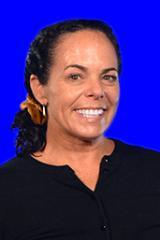
Dr. Jennifer Attonito, Professor in the Department of Management Programs, College of Business at Florida Atlantic University, is a 2021 Consortium Grant recipient. Her Consortium-funded research focuses on acceptance of and access to medical marijuana in Florida’s nursing homes.
Welcome to Researcher Spotlight, a video series for the Consortium for Medical Marijuana Clinical Outcomes Research, showcasing research of our grant awardees. Each episode spotlights a grant recipient to share their research question, methodological approaches, and current and expected outcomes. On today's installment, we introduce you to Dr. Jennifer Attonito, professor in the College of Business at Florida Atlantic University. Dr. Attonito is a 2021 Consortium grant recipient whose research focuses on medical marijuana in Florida's nursing homes.
Hi there, my name is Dr. Jennifer Attonito and we are here at Florida Atlantic University in lovely Boca Raton. I worked for many years in HIV research and education prior to academia and mostly in HIV areas and the intersection between that and substance abuse disorders. And so my whole life has always been in public health and that's what kind of inspired all of this. I conduct human subjects research. My lab is the computer and the world out there and I mostly do survey research and interview research and I come back here and I crunch the numbers.
This is the first study I'd ever done that was specific to medical cannabis. And we were exploring attitudes, beliefs, and knowledge around medical marijuana among healthcare providers and patients in long-term care facilities in Florida. I was prompted to investigate this because we were observing challenges in access to medical marijuana in this population. We wanted to know more about where the gaps were in accessing medical marijuana.
This study was a mixed-methods design. We did surveys, and we did interviews, particularly for the long-term care community, physicians, nurses, nurse practitioners, PAs, therapists, all different kinds of providers. I think it's the the questions that we were asking were what do they know about the benefits of medical marijuana, the risks of it, dosing, administration, their confidence in being able to talk to patients about medical marijuana, whether they had ever been certified, to recommend, to recommend medical marijuana. And we also wanted to know about their attitudes around it. How did they feel about the legality of it? Would their patients be interested in this? Did they feel it had benefit, merit as a viable therapeutic resource?
Our most valuable findings really underscored what had already been identified in the larger population. The healthcare providers in the long-term settings equally don't have the the knowledge and the training in order to to have these conversations with their patients. They're very hesitant. Their knowledge of medical marijuana was relatively accurate. There were a few consistent errors that they would make. One was that a lot of the healthcare providers thought medical marijuana could be helpful for acute pain or depression, and thus far, we have not, we don't have any real evidence of that.
Overall, their attitudes around medical marijuana were positive. They did feel that it had potential therapeutic potential. The particular symptoms that they were most interested in possibly alleviating through medical marijuana were chronic pain and sleep. And that was where I thought things got most interesting. Going forward, I would say one of the most important things that we need to do next, at least based on this research that we did, is that we need to really start having ongoing conversations with the administrators in long-term care facilities in order to make changes to, for the patients to be able to access the medical marijuana products that they are recommended.